About kiting in Americas
160 spots from the Great Lakes to Brazil's trade coast. US depth, Caribbean and Baja trade winds in the northern winter, the Gorge and Brazil in the northern summer — the Americas offer an in-season launch in every month of the year.
📸 Featured spots

Photo: Kirt Edblom · CC BY-SA 2.0 · Wikimedia Commons
Kanaha Beach — Kite Beach, Maui — USA — Hawaii
Apr–Oct · NE trades 15–25 kt
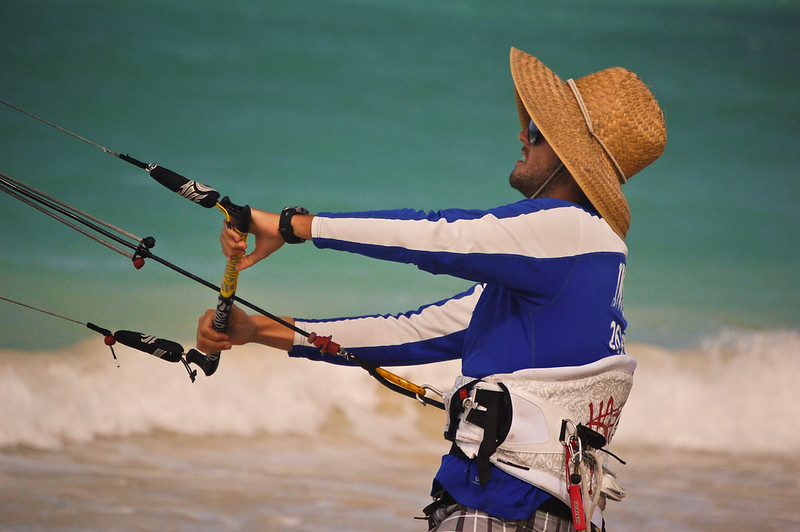
Photo: Asa Wilson · CC BY-SA 2.0 · Flickr
Kailua Bay — Oahu, Hawaii — USA — Hawaii
Apr–Oct prime · NE trades 12–25 kt most afternoons, rideable year-round

Photo: Zach Dischner · CC BY 2.0 · Wikimedia Commons
Hood River — The Gorge — USA — Oregon
May–Sep · Gorge thermal 15–35+ mph, gusty
USA — 133
- Kanaha Beach — Kite Beach, Maui — Apr–Oct · NE trades 15–25 kt
- Kailua Bay — Oahu, Hawaii — Apr–Oct prime · NE trades 12–25 kt most afternoons, rideable year-round
- Hood River — The Gorge — May–Sep · Gorge thermal 15–35+ mph, gusty
- Sherman Island — Rio Vista — Apr–Sep/Oct · Delta thermal 16–30 kt
- South Padre Island — Mar–Nov · spring SE 18–25 kt
- Cape Hatteras — Pamlico Sound — Apr–Oct · SW thermals 15–25 kt, Sep best wind+waves
- Islamorada — Florida Keys — Nov–May most reliable · light-moderate, foil territory
- Key West — Nov–May · peak Dec–Feb 15–25 kt
- Crissy Field — San Francisco — Mar–Oct · thermal westerlies 12–22 kt, light and fluky inside, very windy in the channel, gusty at the Gate
- Third Avenue — Foster City — Apr–Sep · NW clearing winds in spring, W thermal winds into September, typically 15–25 kt in summer
- Coyote Point — San Mateo — Mar–Oct · NW/WNW clearing winds peak Apr–Jun, W thermal winds Jul–Sep, Mar and Oct are transition months
- Alameda — Crown Beach — Mar–Aug · best Mar–May, W–NW winds regularly 20+ mph in spring, milder W–SW 12–15 mph in summer
- Waddell Creek — Davenport — Mar–Sep · NW side-onshore afternoon sea breezes; big wind + big surf in spring (experts only), mellower surf in summer
- Pismo Beach — Mar–Oct · NW thermal winds building in the afternoon, typically 10–20 kt (spring NW often 15–25 mph); near-onshore angle — snowy plover rule: do NOT launch or land south of the Pier Ave exit
- Leo Carrillo — Malibu — Apr–Oct · NW to W winds, peak in July; rideable wind is mostly light — 7–12 kt for 85% of rideable hours (lets-kite/Open-Meteo data), so big kites despite the advanced wave setting
- Belmont Shore — Long Beach — Mar–Oct · SW thermal afternoon winds, typically 10–20 kt in Long Beach guides; wind blows onshore/inland, pushing learners back toward the beach
- Mission Bay — Fiesta Island, San Diego — Apr–Oct · W/WNW afternoon winds 8–14 kt (9–16 mph) — San Diego is the light-wind capital of California, big 12–17 m kites typical; avoid NE, S and SE winds (gusty and hazardous); a kite leash is required when riding in San Diego
- Jetty Island — Everett — Apr–Sep · NW afternoon thermal 15–20 kt, typically 2–7 pm; foot ferry only Jul 5–Labor Day
- Floras Lake — Langlois, Oregon — Apr–Sep · NW winds averaging 15–25 kt mid-day to late afternoon
- Pistol River — Gold Beach, Oregon — Apr–Sep · N wind, frequently sustained 25+ kt, building through the afternoon
- Jones Beach — Columbia River, Oregon — May–Sep · W afternoon wind driven by the Astoria–Portland temperature gap; strongest and cleanest toward the Washington side ('Nuclear Alley')
- Mokuleia — Oahu, Hawaii — May–Sep · NE trades 15–25 kt
- Kihei — Maui, Hawaii — Nov–Mar · Kona S/SW + accelerated N trades, gusts to 40 kt
- Anini Beach — Kauai, Hawaii — May–Sep · NE trades (Anini-specific wind speed not verified)
- Matheson Hammock — Miami — Oct–May · best Nov–Apr, ENE–SE winds off Biscayne Bay, in-season 12–20 kt
- Crandon Park — Key Biscayne — Nov–Apr · in-season 15–20 kt, 20–25 kt when cold fronts pass; N through S easterly winds work, never W (offshore)
- Miami Beach — 25th Street — Oct–May · main season Oct–Apr, N–E–S rideable; 15+ mph needed for a twin-tip
- Fort Lauderdale Beach — Nov–Apr · peak on NE–E cold fronts; S–SE winds most consistent at Beach Park in winter
- Stuart Beach — Hutchinson Island — Oct–Mar · peak fall/winter cold fronts, E–NE–SE winds 15–20 kt
- Kite Beach — Jupiter — Sep–May · best Oct–May (Dec–Feb most consistent), N, NE and E–SE winds 15–25 kt; no westerly winds
- Sebastian Inlet — Oct–May · fall/winter NE swell season, best winds NNW, N, NE, SE, SSE; powerful waves and strong inlet currents
- 520 Slick — Cocoa Beach — Oct–May · best on N, NNW, NW and W winds off the causeway (mirror-flat slick), NE gusty near the launch; frontal winds up to ~25 kt
- Treasure Island Beach — Oct–May · W–NW cold-front winds best on the Gulf beach; light-to-moderate winds, often big-kite days, N and S–SW also rideable
- Skyway Beach — St. Petersburg — Sep–Jun · prime Sep–mid Jun; Tampa Bay winds most consistent Sep–May at 15–25 kt
- Fort De Soto — East Beach — Oct–May · best Nov–Mar, frontal NE–E and spring S winds; Elite Watersports puts the wider Tampa Bay season at Sep–May with light summer winds
- Sanibel Causeway — Oct–May · best Nov–Apr, frontal N–NE winds (Florida's Oct–Apr frontal pattern); all-direction island launch means the sheltered side works on most winds, summer is light-wind/sea-breeze only
- Mississippi Gulf Coast — Biloxi — Oct–May · frontal passages and spring southerlies (Gulf Coast Kite works this stretch on SW, S, SE)
- Gulf Shores — Little Lagoon — Nov–Jul · best wind Nov–May (Gulf Shores Kiteboarding); learn-to-kite/wing season Oct–early Jun, plus spring–early-summer sea breezes
- Pensacola Beach — Big Sabine — Oct–May · winter frontal winds (W–NE work on the lagoon side) and spring sea breezes
- Navarre Beach — Mar–Oct · best Apr & Sep, afternoon sea breezes on Santa Rosa Sound; single-source season, see notes
- Okaloosa Island — Fort Walton Beach — Oct–May · best Oct–Apr, cold-front NW–N–NE winds for the bay side (first fronts late Sep/early Oct per XL Kites); spring adds a reliable S sea breeze, summer is lighter sea-breeze only
- Panama City Beach — Nov–May · Gulf side rides E–SE–S winds in spring; fall/winter northerlies are OFFSHORE on the Gulf, so riders switch to the bay side (Carl Gray Park) — 'year-round' rejected, see notes
- Tybee Island — North End — Mar–Oct · regular NE and SE winds; lets-kite computes Mar–Oct peaking in June
- East Beach — St. Simons Island — Mar–Oct · spring/fall winds and summer sea breezes; low-tide afternoons enhance the NE sea breeze (WeatherFlow Golden Isles guide)
- Charleston — Folly Beach / Isle of Palms — Mar–Oct · best Apr–Jun and Sep–Oct, afternoon SW sea-breeze thermals and NE frontal winds
- Wrightsville Beach — South End — Mar–Oct · peak May, NE to S side-shore winds over SE swell
- Bogue Sound — Emerald Isle — Mar–Aug · peak May, sheltered Bogue Sound winds; tide-influenced, unlike Pamlico Sound
- Ocracoke Island — Apr–Oct · best spring and fall, SW/S winds on Pamlico Sound at 15–25 kt in season
- Nags Head — Jockey's Ridge Soundside — Apr–Oct · spring/fall frontal winds and summer SW sound breezes over Roanoke Sound
- Cole Park — Corpus Christi — Mar–Oct · prevailing SE winds, steady 15–20 mph in season and 17–21 mph average on core-summer days (kiteboarding.com); full Corpus season runs through Oct, frontal N winds take over in late fall/winter
- Wildcat Park / Packery Channel — Corpus Christi — Mar–Oct · prevalent SE winds — Wildcat is normally the windiest Corpus-area spot in SE flow (kiteboarding.com); Corpus peak wind season mid-Mar–Jun (Kite & Wing Academy), full season through Oct
- Texas City Levee — Sep–Jun · best on S, SE, E, NE and N winds, no west wind (Houston Kiteboarding); gentle Gulf winds spring–fall and strong reliable winter winds, with August the lightest month of the year — lessons pause and resume in September
- East Beach — Galveston — Mar–Jun · spring season peaking in May (lets-kite modelled 405 usable hours in May); works on N through SW winds, good wave riding in SE swell
- Cape May — Higbee Beach — Sep–Nov + Mar–May · NW–W Delaware Bay winds (Green Hat: NW & West winds primarily in fall and winter); small waves and chop from wind swell
- Ocean City — Corson's Inlet — May–Oct · NE and SE frontal winds best (Unplug: best months May–October); wide sandy inlet launch
- Barnegat Bay — Seaside Park — Apr–Nov · S, SW and W winds at the Seaside Park shore launch (Green Hat); boat-access Kite Island flats are best SW, S and SE, with N, NE and E also good
- Sandy Hook — Mar–May + Sep–Nov · best NW, SE also good but more sideshore (Green Hat); bay-side flat water with 4–5 ft tides
- Napeague Harbor — Amagansett — Mar–Jun & Sep–Nov · the Napeague Stretch funnels smooth, steady wind across the harbor and it works in any wind direction; older spot guides rate NW best and SW gusty — summer (Jul–Aug) is the weak, crowded gap between the two prime windows
- Kalmus Beach — Hyannis — May–Sep · SW summer thermals build late morning through the afternoon, side-onshore, reliably 12–20 kt on hot days; W–SW–S are the preferred directions — Kalmus is famous for thermal wind when other beaches are dead
- West Dennis Beach — May–Nov · S–SW summer thermals — on good summer afternoons the SW thermal reaches ~20 kt (Unplug), with 2–3 good S–SW days a week in summer; SE through W all work, and fall frontal winds extend the season past the summer thermal peak
- Nahant — Apr–Jun, Sep–Nov · two faces: Dog Beach on W–NW post-frontal winds (offshore, gusty, flat) and Long Beach on E–NE–SE; spring/fall frontal season
- Pleasure Bay — Boston — Apr–Jun, Sep–Nov · best S–SW–SE in the enclosed lagoon, NE rideable but gusty, NW very gusty; Windy.app best season Mar–May + Sep–Nov
- Pine Point — Scarborough — May–Oct · best SSW, good SSE–S–SW (Maine Kite); the beginner sand bar works only at low/falling tide on S–SW winds
- Caseville — Saginaw Bay — May–Oct · Thumb-tip exposure catches NW–NE with waves on the Huron side, while the Saginaw Bay side of the park beach stays shallower and calmer; bay thermals on warm summer afternoons
- Deer Creek Reservoir — Heber City — May–Oct · SW Provo Canyon thermal/venturi that builds through the afternoon, plus gusty frontal days
- Grand Haven City Beach — May–Oct · Prime months late spring to early fall per Grand Haven kite guide; MACkite's own downwinder from City Beach is best on strong, consistent north winds generating large waves
- Indiana Dunes — Miller Beach & Michigan City — May–Oct · Strong, steady winds for experienced riders on aligned days and light-wind beginner days per Dig the Dunes; Michigan City has the widest wind-direction range (SW through E) and a late-summer/early-fall thermal boost per a Dig the Dunes rider interview
- Lake Hefner — Oklahoma City — Apr–Oct · frontal Oklahoma wind, strongest in spring and fall, with hot, lighter midsummer spells
- Lake Mille Lacs — Garrison — May–Oct · frontal winds over a very large fetch; conditions turn rough fast
- Lake St. Clair Metropark — Metro Beach — May–Oct · works on E, SE, S; spring southerlies are the standout (warm air over cold lake = strong, lofty wind); onshore winds push riders toward the rock seawall, so intermediates+ and the west end by the bay is the safer zone
- Lake Winnebago — Fond du Lac — May–Oct · frontal and lake-breeze winds over a huge fetch, building chop
- Montrose Beach — Chicago — May–Oct · N, NW, NE, ENE and SE winds work; gusty and changeable, spring/autumn side-onshore winds 10–20 knots per Rove.me, summer winds mostly SW/W
- Pere Marquette Beach — Muskegon — May–Oct · side-onshore NW/SW Lake Michigan winds, strongest and most consistent in spring and fall, lighter in midsummer; W/NW winds build 1–2 m waves
- Petobego Pond — Grand Traverse Bay — May–Oct · cleanest on N; SW/W/NW smooth, S gusty over the city, E not recommended; spring and fall most consistent, summer light and variable
- Silver Beach — St. Joseph — May–Oct · Best NW to W winds at Silver Beach (NW gusty near shore by the dune, cleans up ~100 yards out past the pier railing); St. Joseph generally gets consistent SW thermals in spring, summer and early fall per Stoke Riders guide
- Tawas Point — East Tawas — May–Oct · point (Lake Huron) side works N, E, SE, S, SW with reliable summer SE thermals building from ~noon; inside Tawas Bay side works SW, W, NW over dead-flat protected water
- Waukegan Municipal Beach — May–Oct · Best on NE, E and SE side-onshore winds; summer thermals 12–18 knots, spring 15–25 knots, fall NE fronts 20–30 knots per Stoke Riders guide; avoid offshore W/SW
- White Bear Lake — Ramsey Beach — May–Oct · frontal winds and chop; busy recreational lake in summer
- Cheney Reservoir — Apr–Oct · Reputedly the windiest lake in mainland America — Islands cites a steady ~13.9 mph average headwind and National Geographic named Cheney State Park its top Kansas kitesurfing pick. At M&M Point (best on southerlies, per lets-kite): rideable wind 7–12 kt 52%, 13–20 kt 40%, 21–30 kt 7%, with Mar/Apr/Jul the most rideable months. Tornado Alley: supercell thunderstorms can end a session abruptly.
- Dauphin Island — Mar–Jul · spring–early-summer season peaking in May per lets-kite's Open-Meteo rideable-day model for Dauphin Island (24–29.5 rideable days/mo Mar–May), working winds ENE through W with SE–SW best on the south-facing beaches. Local schools add that the strongest, most reliable wind is actually the Nov–May frontal season (see notes).
- Folly Field Beach — Hilton Head — Mar–Oct · best on NE/ENE/E/ESE/SE/SSE; spring frontal NE winds and warm-season southerly sea breezes — in the Apr–Jul tourist peak this launch is advanced-only (crowds), with beginners appropriate again Aug–Mar
- Fort Morgan — Nov–May · NW, N and NE frontal winds on the Mobile Bay (bay) side per Gulf Coast Kite; Gulf Shores Kiteboarding calls Nov–May the best wind and Oct–early June the wider learn-to-kite season
- Fort Pierce Jetty Park — Oct–May · Prime winter N, NE and SE side/side-on winds with spring S winds (Elite Watersports); Florida east-coast windy season is generally Oct–May, with Elite calling Nov–Apr the windiest months statewide
- Grand Isle — Mar–Jun · spring season peaking in May per lets-kite's Open-Meteo rideable-day model for Grand Isle (Mar 22 rideable days rising to 28 in May); working winds ENE through W, i.e. the E–S Gulf flow. Most rideable hours are light (7–12 kt in ~80% of rideable hours) — big-kite territory outside frontal days.
- Huguenot Memorial Park — Oct–May · best on ENE/E/SE; the Pond works in any wind direction but winds crossing the land are gusty — winter fronts and spring sea breezes, and an outgoing tide on an east wind adds extra knots of power
- Lake McConaughy — May–Oct · Nebraska's largest reservoir with ocean-like fetch and white-sand beaches. lets-kite's rideable-wind split: 7–12 kt 62%, 13–20 kt 32%, 21–30 kt 6% — mostly big-kite prairie wind, but frontal days can push 30–40 kt and build significant waves fast. Heavy motorboat traffic mid-summer; violent thunderstorms/tornado risk in season.
- Matanzas Inlet — Oct–Jun · Prevailing NE winds in fall and spring after cold fronts oppose the outgoing tide for extra apparent wind (iKitesurf); S/SE winds also work on the south side, and N, NNE, NE, SE, SSE and S are the recommended directions (Unplug)
- Myrtle Beach Surf Zones — May–Sep · warm-season afternoon thermal/sea-breeze winds; this is also the city's regulated season — from May 1 through Labor Day the designated surf zones are the only places to ride between 10:00 a.m. and 5:00 p.m.
- Ponce Inlet — Oct–May · Powerful north winds and consistent swell in Florida's Oct–May east-coast windy season (Elite Watersports); iWindsurf rates the jetty rideable on winds from N through SE
- Port Aransas — Oct–Apr · prime wave season is frontal: kiteboarding.com calls Port Aransas the best wave-riding spot on this coast when a cold front brings strong NE winds, with flat water in the lee of the long rock jetty and rolling waves further away from it. SE sea-breeze/thermal winds dominate late spring–summer and give side-onshore Gulf-beach riding, but the jetty wave spot is at its best on the fall–spring fronts.
- Rush Lake — Mar–May, Sep–Nov · Front-driven south winds can 'go nuclear' in spring and fall — UWA cites 3.2-sail days and semi-trucks blowing over on I-80 as the cue to go; post-frontal north winds are lighter but steadier. Occasional 15 m-kite summer thermals, but only when the lake holds water. Advanced, gusty, frontal riding only.
- Surfside Beach — Nov–Apr · Windy.app spot data for Surfside Beach lists Nov–Apr as the best season with working winds N, NE, SE and S — winter cold fronts bring the N/NE wind and summer crowds disappear; SE/S sea breezes extend riding into spring.
- Tigertail Beach — Oct–May · DEVIATES from the inventory hint (Mar–Nov): winter is primetime in Southwest Florida — cold fronts bring the reliable wind (local reporting names Tigertail and Naples Beach as the area's best spots in winter), while Jun–Aug is the lightest, least consistent period
- Utah Lake — Lincoln Beach — Mar–May, Sep–Nov · Front-driven north clearing winds are, per Utah Windriders (UWA), the smoothest, cleanest wind in Utah — near-nuclear spring sessions (3.9 sails) with 4–6 ft swell on the long fetch; the lake is mostly dead in summer and fall adds late-afternoon 7.5-class thermals. Rideable days are frontal and episodic, not daily.
- Double Bluff — Freeland — Oct-Mar — winter kitesurf season, best on a low tide (Rove.me inventory source); Puget Sound southerly storm winds. Thin source base: season is single-source.
- Locust Beach — Bellingham — Mar-Aug, peak Jul — LetsKite season (258 usable hours in Jul, wind mostly 7-12 kt when rideable, its 2-year model); works SE-SSE-S-SSW-SW; summer afternoon northerly thermals also described by local lesson providers
- Westport — Half Moon Bay — Mar-Aug, peak May — LetsKite season (374 usable hours in May, wind mostly 7-12 kt when rideable, its 2-year model — model data, not a local guide); works on N, S, SW, W and NW winds
- Fort Stevens Shipwreck — Hammond — Apr-Sep (inventory) — summer northerlies, sailable N and S (Oregon Coast Visitors Association); downwinders between Lot B and the Peter Iredale wreck are a local favourite
- Manzanita Beach — Apr-Sep (inventory) — reliable summer northerlies (OCVA); described by Rove.me as possibly the windiest place on the Oregon Coast, and in spot notes as often blowing about 10 mph stronger than the rest of the coast (smaller kites)
- Roads End — Lincoln City — Apr-Sep — steady northerly winds (OCVA); Windsurf Oregon table: Apr-Sep, North wind, wave break; wind usually picks up as morning fog burns off, sometimes earlier than other coast spots
- Ocean Beach — San Francisco — Apr–Sep main season (Bay Area Kiteboarding: 'usually windy from April-Sept'; mainly spring–fall, winter storm sessions possible with extreme caution). Prevailing WNW in summer, mostly straight onshore at peak; SSE sideshore in winter storms.
- Bodega Bay — Doran Beach — Mar–Sep per inventory / 101 Surf Sports regional pattern (consistent W/NW winds Mar–Sep on this coast). 101 Surf Sports calls Bodega a big-wind spot — ride a smaller kite. No spot-specific wind statistics verified.
- Dillon Beach — Mar–Sep per inventory / 101 Surf Sports regional W/NW pattern. CONTESTED: iWindsurf's Tomales Bay local-info page gives the Dillon sailing season as March–June only (see notes). Typically windy — smaller kites preferred (101).
- Jalama Beach — Lompoc — Peak mid-March to late May (iWindsurf season table; Jalama is the first California site to feel the NW spring winds and the harbinger of NW clearing winds). Wind is always extremely gusty, famous for afternoon increases of 20+ knots in a few minutes. CONTESTED: some aggregators extend the season to Sep — the expert local source says spring (see notes).
- Lake Isabella — Jun–Sep per inventory (THIN — see notes). Pattern from local sources: calm mornings, winds pick up from noon to evening turning the lake white-capped, predominantly from the west; a flashing-light warning system at Engineers Point warns of high-wind conditions. No authoritative month-by-month wind season was found.
- C Street — Ventura — Apr–Sep, peaking in July (lets-kite modelled season: Apr–Sep, July peak with the most rideable days; rideable wind mostly light — 87% of rideable hours at 7–12 knots, big-kite territory). Best direction WSW sideshore with slight side-off (The Outbound); works on WSW/W/WNW/NW. Best sessions often late afternoon.
- Cabrillo Beach — San Pedro — Best and most predictable Apr–Oct per iWindsurf local info: SW/WSW winds 18–25 mph, though June Gloom fog can lighten or delay them to 12–15 mph. Nicknamed 'Hurricane Gulch' for reliable strong westerlies. iWindsurf sidebar lists a broader Feb–Oct season (see notes).
- Seal Beach — Mar–Oct per inventory, corroborated for Orange County spots by SoCal Kitesurfing's owner (Orange Coast magazine: best Mar–Oct). iKitesurf local info: best in spring Mar–May (SW, frontal/clearing winds averaging 16–22 mph, 10–15 days/month in a normal year, typically blowing ~1–5pm); summer afternoons historically 15–20 kt but a 2011 local-expert update on the same page disputes summer reliability (thermal blocked by a Long Beach heat bubble, 20 mph only in spring, mid-Mar–mid-May many 20 mph days); Sep–Feb wind is fickle except late Jan–Feb storm-clearing winds of 20–25 kt. Spring is the defensible prime season.
- Huntington Beach — Sunset Beach — Mar–Oct per inventory, corroborated by SoCal Kitesurfing's owner (Orange Coast: Orange County's best spots incl. Seal, Sunset and Huntington are best Mar–Oct, rideable all year). SW to NW afternoon thermal winds per lets-kite Sunset/Huntington pages; Secret Los Angeles says Sunset is windier than Huntington Beach proper, which trades some wind for better waves.
- Silver Strand — Coronado — CONTESTED SEASON — see notes. California State Parks brochure: intermediate-to-advanced kiteboarders find the BEST riding Oct–Jan, and wind speed here is higher than at other San Diego area beaches. iWindsurf local info lists the season as Oct–Apr. A long-running San Diego local overview (Kiteforum) calls Feb–Apr San Diego's best season for frequency and velocity (WNW 14–18 mph) and names Silver Strand a best spot then, and also names it a best spot in the low-frequency Aug–Oct and Nov–Jan periods. So this is NOT a winter-only spot: mo is given as Oct–Apr (the union of the Parks best window and the iWindsurf/spring windows); summer is San Diego light wind (May–Jul WNW mostly 8–14 mph, few rideable days).
- Tourmaline — Pacific Beach, San Diego — Feb–Apr is the prime window per the inventory source (Kiteforum San Diego seasons overview by a local riding since 1998): Feb–Mar–Apr is San Diego's best season for frequency and velocity — standard WNW days average 14–18 mph, storm south winds 20–28 mph, storm NW clearing winds 18–24 mph, 10–18 rideable days/month counting ALL San Diego sites — with Tourmaline named a best spot for the season. Honest caveat: San Diego is a light-wind city; outside Feb–Apr (and occasional Nov–Jan storm/clearing days, when the same overview also names Tourmaline a best spot) rideable days drop to ~3–9/month at 8–14 mph. The City of San Diego says the area is used by kite surfers and sailboarders year-round, but that is use, not reliable wind.
- Lake Mojave — 6 Mile Cove — Apr–Oct per inventory; Windy.app lists kitesurfing at Six Mile Cove Apr–Sep, working N/NE/E/SE/S winds. Desert-lake pattern, not a reliable daily thermal: wind arrives with frontal/spring south flow — NWS Las Vegas recreation forecasts for Cottonwood Basin repeatedly show S winds 20–40 mph with 2–5 ft waves — and can switch on abruptly (a firsthand account describes dead calm flipping to ~20 mph at noon) with dangerous gusts reported by kiters. Long light/calm spells between fronts and extreme summer heat are the norm in mid-summer.
- Lake Havasu — Lake Havasu City — Apr–Oct main season per inventory and lets-kite, which credits consistent afternoon thermal winds; its modelled rideable-day data actually peaks in May and runs strongest Mar–Jul, with wind when rideable mostly light — 7–12 kt in 77% of rideable hours, 13–20 kt in 22% — i.e. big-kite / light-wind territory, not a strong-wind spot. Summer heat regularly exceeds 43°C, with Arizona monsoon thunderstorms possible; expect light spells between frontal/thermal days.
- Assateague Island — Mar–Sep · works with winds from all directions thanks to the bay's width (lets-kite); rideable wind is mostly 7–12 kt (79% of rideable hours, lets-kite/Open-Meteo) — big-kite territory
- Cape Henlopen — Apr–Jun, Sep–Nov · favoured S/SW blow and onshore winds that guide kiters back toward shore (Delaware Today); summer winds are the least favoured of the year and the park beaches are at their busiest — local riders start up in autumn (Delaware Today). No spot-specific wind-speed range was verified, so none is claimed
- Dewey Beach — Rehoboth Bay — Apr–Jun, Sep–Nov · 'sweet south and southwest blow' and onshore winds that guide kiters back toward shore (Delaware Today); summer winds are the weakest of the year and the shores are packed — local riders favour autumn (Delaware Today). No spot-specific wind-speed range was verified, so none is claimed
- Stone Harbor — Apr–Jun, Sep–Nov · works with winds from N through S (lets-kite); rideable wind is mostly light — 7–12 kt for 87% of rideable hours (lets-kite/Open-Meteo), big-kite territory; lets-kite's computed season runs Apr–Sep and peaks in September
- Virginia Beach — 88th Street — Mar–May, Sep–Nov · NE winds in autumn/winter bring ideal side-shore conditions; S/SW summer thermals give regular sessions; rideable wind is mostly 7–12 kt (78% of rideable hours, lets-kite/Open-Meteo) — big-kite territory; the resident school does not teach in winds under 12 kt
- Fogland Beach — May–Nov · SW wind funnels up the Sakonnet River with a long fetch; over 15 kt expect many riders and chop — town beach pass required Memorial Day–Labor Day
- Gilgo Beach — Apr–Jun, Sep–Nov · rideable wind mostly light — 7–12 kt for 74% of rideable hours, 13–20 kt for 23% (lets-kite/Open-Meteo) — big-kite territory; Town beach permit in summer
- Long Beach Island — Apr–Nov · best SE, S and SW (strong SW thermals), also N/NW and strong NE; W is very choppy — ACCESS NOW REPORTED CLOSED, see notes
- Second Beach — Sachuest Beach — May–Oct · Atlantic-facing beach — town ordinance: no riding in the swim area May 15–Oct 1, designated launch areas only, no launch from the designated beach area until after 6 p.m. in that period, and kitesurfing prohibited until August in plover years (see notes)
- West Meadow Beach — Mar–Jun, Sep–Nov · good fetch in N wind across Long Island Sound; rideable wind mostly 7–12 kt (75% of rideable hours, lets-kite/Open-Meteo) — big-kite territory
- Chapoquoit Beach — May–Oct · Buzzards Bay winds — documented choppy W wind; windsurf directions N, NW, W, SW (MIT/WHOI guide); local kiters say the spot 'gets good wind a lot' — big-air spot, jumps of 25–35 ft reported; no verified wind-speed range
- Hampton Beach — May–Nov · E-facing beach, works N through S via E (best on NE nor'easters); rideable wind mostly light — 7–12 kt for 87% of rideable hours (lets-kite/Open-Meteo), peak month May; fall riding is storm-driven
- Lexington — May–Oct · N, NE, E, SE winds (Great Lakes Kiteboarding); launch south of the breakwall on northerlies — giant, glassy waves on a big north wind, wrapped around the breakwall behind the marina jetty's ~200 yd wind shadow
- Port Huron — Kraft Road — May–Oct · E, SE winds at the beach itself (Great Lakes Kiteboarding); north winds are downwinder weather — the signature ride is a ~7-mile downwinder from Lakeport State Park back to Krafft Road, slashing waves the whole way
- Silver Lake — Little Sable Point — May–Oct · S/SSW (sometimes SW) southerly machine — dune thermal + Lake Michigan pinch point amplify the wind (MACkite: 5 kt at the south end of the lake can be 25 kt at the Point); light wind only works S/SSW/SW; bring two kites, including a small one
- Harsens Island — Muskamoot Bay — May–Oct · best on SW and W winds — steady, with a straight shot across the bay; S winds are offshore and tricky to launch but dead flat once out, NW/N slightly gusty; rideable wind is light-to-moderate, 7–12 kt most rideable hours (lets-kite/Open-Meteo) — big kites
- Sheboygan — South Beach — May–Oct · southerly thermals are the classic pattern — building from late morning (~11am) as warm land air meets cold lake water, typically 15–25 mph on kite days; N/NE storm winds build the biggest Lake Michigan surf
- Bradford Beach — May–Oct · E/NE/SE lake winds and afternoon lake-breeze days are the rideable pattern on this east-facing shore; W winds are offshore — no spot-specific wind-speed range was verified, none is claimed
- Baileys Harbor — Door County — May–Oct · works on S winds — Door County's own park page puts kiters here on strong southern winds; E/NE are onshore and rough, and W/NW winds are OFFSHORE off this Lake Michigan-facing beach — do not launch in west winds
- Lake Waconia — May–Oct · best with some west in the wind; waves/chop build best on a strong NW day (Kiteboard Minnesota) — no spot-specific wind-speed range was verified, none is claimed
Brazil — 11
- Cumbuco + Cauípe Lagoon — Jun–Dec · peak Aug–Nov, trades 18–30 kt
- Jericoacoara — Praia do Preá — Jul–Feb · peak Aug–Dec, 22–28+ kt
- São Miguel do Gostoso — Jul–Feb · trades 15–30 kn
- Barra Grande — Piauí — Jul–Jan · trades 18–30 kn
- Ilha do Guajiru — Itarema — Jul–Jan · trades 20–30 kn
- Atins — Lençóis Maranhenses — Jun–Jan · E/SE trade winds 15–30 kt, most consistent Aug–Dec; the Lençóis dune lagoons hold kiteable water roughly Jun–Oct
- Praia de Pipa — Cacimbinhas — Jul–Feb · E/ESE/SE trade winds 15–25 kt, core Aug–Nov at 20–30 kt, lighter Dec–Feb; Mar–Jun is the wet season and is out
- Taíba — Lagoa da Taíba — Jul–Jan · E/SE trades 18–30 kt, peak Aug–Nov (resident schools and guides; lets-kite’s Open-Meteo model reads much lighter at 7–12 kt — see notes)
- Fortim — Pontal de Maceió — Jul–Jan · E/NE/SE trades, thermally reinforced in the afternoon; guides quote 15–20 kt in the Aug–Dec core, but the wind model says most rideable hours are 7–12 kt big-kite wind — both stated in the profile
- Paracuru — Quebra-Mar — Jul–Jan · E/SE trades 15–25 kt on the guides, most consistent Sep–Nov; lets-kite’s wind model reads mostly 7–12 kt rideable hours — both stated in the profile
- Icaraizinho de Amontada — Jul–Jan, peak Aug–Nov (Sep windiest) · E–ESE trades side-onshore; guides/schools quote 18–35 kt riding ranges, but ECMWF model averages are much lower (~17–18 kt in peak months, ~13 kt Jan) — both stated in the profile
Mexico — 7
- La Ventana / El Sargento — Nov–Apr · N thermal + Cerralvo Venturi, builds late morning
- Los Barriles — East Cape — Nov-Apr prime Nov-Mar, N winds high-teens to low-20s kt, El Norte events 25+
- Isla Blanca — Cancún — Nov–May · 15–25 kt, most directions work
- Progreso — El Playón — Nov–Jul · two regimes: Nov–Mar nortes (N cold-front winds 20–35 kt), Mar–Jul NE thermal brisa 15–25 kt; Aug–Oct is the rainy, less reliable shoulder
- Holbox — Playa Las Nubes — Nov–May · winter Nortes bring N/NE wind to 25 kt (Nov–Feb); from Feb, regular E winds 12–20 kt with an afternoon thermal off Cabo Catoche; the wind model reads lighter (monthly averages 9–14 kt, May its windiest month) — both stated in the profile
- Bucerías — Feb–Jun · afternoon thermal from ~noon to 5–7 pm, guides 12–22 kt (25+ on strong days); weather models read only 5–7 kt and miss the thermal — both stated in the profile
- El Cuyo — Nov–Jul · Feb–Jun NE–E thermal builds afternoons (locals report 18–23 kt); Nov–Feb Nortes bring stronger, gustier N wind and swell; wind models average only 8–12 kt and miss the thermal — both stated in the profile
Canada — 7
- Îles-de-la-Madeleine — La Lagune — Jun–Sep core, operators into Oct · Best W–SW — a thermal-reinforced lagoon wind, SW prevailing in the warm season; typically 9–20 kt with 7–12 kt the most common band (lets-kite), so big kites much of the time; late Jun–early Sep is the sweet spot
- Baie de Beauport — Québec City — May–Oct (core Jun–Sep) · The NE “nordet” funnelled up the St. Lawrence is the working wind, E also good; a light-wind, big-kite spot — 82% of rideable hours at 7–12 kt (lets-kite); the site and its school run late May–early Oct and the bay is closed Nov–Apr
- Oka — Lac des Deux Montagnes — Jun–Aug (peak Aug) · Frontal lake wind, not a daily thermal: SW is the common best direction, S through W to NW all work, N/NE do not; light and big-kite — 84% of rideable hours at 7–12 kt (lets-kite); shoulder days occur in May/Sep but are not the verified season
- Carleton-sur-Mer — Baie des Chaleurs — Jun–Sep · Works E through W via S with an excellent southerly fetch; a light-wind spot — 77% of rideable hours at 7–12 kt (lets-kite), big-kite territory; the resident school operates Jun 8–Sep 13. No verified thermal pattern — claims of a famous afternoon thermal here did not survive checking
- Squamish — Howe Sound — May–Sep · SWS season 15 May–15 Sep · SW thermal inflow up Howe Sound, builds 10–11am to evening, typically 18–25 kt
- Nitinat Lake — May–Sep · Thermal inflow up the lake axis (SW–W, funnelled), builds 10am–noon, peaks 2–3pm, typically 15–25 kt (best days 25–30 kt), dies by evening; peak Jun–Aug
- Malpeque Bay — Kite Point (Princetown Point) — May–Oct · Resident school season Jun 8–Sep 15; S/SE/SW best, rideable on almost every direction except E, N gusty; wind builds through the day to sunset; a light-wind, big-kite spot — 51% of rideable hours at 7–12 kt, 39% at 13–20 kt (lets-kite model), frontal days to ~25 kt
Venezuela — 5
- Los Roques — Dec–Jun · trades 15–25 kn
- Adícora — Falcón — Jan–Sep · trades 16–25 kn
- Araya — Playa Los Muertos — Dec–May · E/NE trades — guides 15–25 kn, model reads lighter (mostly 7–20 kn)
- El Yaque — Isla Margarita — Feb–Jun · E/NE trades, sideshore from the left, thermally boosted by the Macanao funnel; builds through the day, peak ~2–5pm; typically 15–25 kt with 25–35 kt gusts on strong Feb–May afternoons (the wind model reads lighter, ~15 kt averages); Dec–Jan and Jul are usable shoulders, Aug–Sep the trough (~55% wind-days)
- Isla Coche — Playa La Punta — Dec–Jun · NE–E trades, peak Jan–Mar; building late morning, strongest around midday into the afternoon and easing towards evening; typically high-teens to mid-20s kt, a touch lighter than El Yaque across the channel; rideable outside the season, just less constant
Colombia — 4
- Salinas del Rey — Santa Verónica — Dec–Apr/May · NE trades 20–35 kt, peak Feb–Mar · GKA World Tour stop
- La Boquilla — Cartagena — Dec–Apr · NE Caribbean trades 15–20 kt, up to 25 kt, peak Jan–Mar; wind builds from late morning and can last to sunset
- Cabo de la Vela — Dec–Aug · NE trade season, strongest and steadiest Dec–Apr at 20–30 kt on small kites (6–9 m); morning SE wind is gusty and offshore, from around midday it swings NE, stronger and steadier, side-offshore in the bay; the wind model averages 16–20 kt in season — local strengthening explains the gap; Oct–Nov are the rainy, low-wind months
- Lago Calima — Dec–Mar & Jun–Aug · afternoon Pacific thermal ('el calimón') building from noon to sunset, guides 15–25 kt (peaks 18–30 kt); lets-kite's model reads only 7–12 kt and calls Jul–Sep the season — both stated in the profile
Dominican Republic — 3
- Cabarete — Kite Beach — Dec–Aug · peak Jun–Jul 20–30 kt thermal trades
- Buen Hombre — Nov–Apr & mid-Jun–mid-Sep · Trade winds ~15 kn avg, 18–25 kn in winter, 20–30 kn in summer
- Las Terrenas — Punta Popy — Dec–Sep · E/ENE trades plus an afternoon thermal (about 1–6 pm) at 15–20 kt, strongest Feb–Aug; Oct–Nov is the lightest, least reliable window
Peru — 3
- Paracas Bay — Sep–Apr · desert thermal builds 11am, peaks 2–4pm 17–23 kt
- Máncora — Apr–Dec · S/SW winds 15–25 kn from around noon, S/SW ground swells and waves in austral winter
- Pacasmayo — El Faro — Apr–Nov · S/SE side-offshore thermal 15–25 kt from noon, prime Jun–Sep with S/SW ground swells; guide figures run well above the lighter wind model — both stated in the profile
Costa Rica — 2
- Bahía Salinas — Playa Copal — Nov–May · Papagayo trades 20–30 kt, gusts 40+ — small kites
- Lake Arenal — Dec–Apr · funnelled trades 20–35 kt, powerful gusts
Aruba — 2
- Aruba — Fisherman's Huts — Jan–Sep · trades 15–25 kt
- Boca Grandi — Jan–Aug · E trades (works NNE–E), onshore to side-onshore, typically 15–25 kt and often stronger with gusts past 30 kt; strongest/most consistent Jan–Aug with the peak May–Jul; Sep–Nov is the lightest, least consistent stretch (some rideable days year-round)
Bonaire — 2
- Bonaire — Lac Bay, Sorobon (Windsurf/Wing only) — Dec–Aug · trades 15–20+ kt
- Bonaire — Atlantis Beach (Kite) — Dec–Aug · trades 16–22 kt
Cuba — 2
- Cayo Guillermo — Late Oct–early May · trades 15–22 kn
- Varadero — Nov–Apr · NE/ENE trades 15–25 kt, peak Dec–Mar; winter cold fronts bring strong N veering NNE–ENE; Jun–Sep is light/thermal only (hurricane season Jun–Nov)
Honduras — 1
- Roatán — Camp Bay — Feb–Aug · trades 15–25 kt, peak Apr–May · school closed Oct–Nov
Panama — 1
- Punta Chame — Dec–Apr · dry-season trades 15–30 kt, Feb safest
Turks & Caicos — 1
- Long Bay Beach — Providenciales — Nov–Aug · E/SE trades 12–25 kt, ~90% kiteable days claimed
Barbados — 1
- Silver Sands — Silver Rock — Nov–Jul · NE–E trades 15–35 kt, Dec–Jun ideal
Saint Martin — 1
- Orient Bay — Nov–Jul · E trade winds 12–20 kn, strongest Jun–Jul; flat inside the reef, waves outside
Puerto Rico — 1
- Ocean Park — San Juan — Nov–Aug · E–NE trades 16–25 kt with 20+ windy days a month in season, reinforced by the afternoon sea breeze; side-onshore on this north-facing Atlantic beach (guides centre the strongest window differently — the local school season is Nov–Aug)
Antigua and Barbuda — 1
- Jabberwock Beach — Dec–Jul · NE trades 15–25 kt (prime Dec–May, peak Jan–Jun), side-on / cross-onshore so riders are blown back toward shore; the school stays open Dec–Aug while the breeze lasts
Saint Lucia — 1
- Vieux Fort — Anse des Sables — Nov–Jul · E/NE trades 15–25 kt funnelled between Saint Lucia and St Vincent, strongest Dec–Apr (the Christmas winds); Aug–Oct is the light, hurricane-season lull
Curaçao — 1
- St Joris Bay — Dec–Sep · E/ENE trades typically 15–22 kt, steadiest Jan–Aug; Oct–Nov is the light, variable rainy-season lull; the bay funnels the trades but the shore can be gusty
Martinique — 1
- Le Vauclin — Pointe Faula — Nov–Jul · E/NE trade winds (alizés) 12–25 kt, side-onshore, most reliable Dec–Apr; lets-kite’s model reads lighter (mostly 7–12 kt), so expect big-kite days between trade pulses
Guadeloupe — 1
- Sainte-Anne — Bois Jolan — Dec–Jun · E trade winds (alizés), side-on at Anse du Belley — the resident school puts them at 15–25 kt, independent trip reports nearer 10–20 kt; peak Jan–Mar; a northerly shift turns this south-coast spot gusty to unusable
Saint Vincent and the Grenadines — 1
- Union Island — Clifton Kite Beach — Nov–Jul · E trades 15–25 kt, core Dec–Jun with the Christmas winds Dec–Feb at 20–25 kt; Nov (from mid-month) and Jul are shoulders, Aug–Oct is the hurricane-season lull
Belize — 1
- Caye Caulker — The Split — Dec–Jun · NE–E trades, peak Feb–Apr; guides quote 15–25 kt on good trade days while the wind model reads lighter (51% of rideable hours at 7–12 kt, 47% at 13–20 kt) — a big-kite spot; Nov–Mar cold fronts bring squally gusts, Jul is a shoulder and Aug–Sep the calmest
Uruguay — 1
- Laguna Garzón — Oct–Apr · Best E, NE, SE, S; a light-to-moderate wind spot — local guides put rideable wind at 10–15 kt on about five days a week and the wind model averages 11–13 kt (≥12 kt for 3+ daytime hours on ~59% of Dec days, the best month); summer days build through the afternoon, mornings often calm; school peak Nov–Apr
Chile — 1
- Matanzas — Oct–Mar · The 'Surazo' — a S/SW Pacific thermal that builds through the afternoon (in by ~1 pm, holding to ~8 pm), typically 15–25 kt and building to 30–40 kt in multi-day episodes; Aug/Sep/Apr are rideable shoulders outside the verified core
Cayman Islands — 1
- Barkers Beach — Grand Cayman — Nov–Jul · E/NE trades, core Nov–Apr (most reliable Nov–Feb); winter cold fronts (Nor’westers) bring 20–25 kt days, but monthly model averages are a lighter 10–14 kt — both stated in the profile; the resident school operates Nov into Jul
Ecuador — 1
- Santa Marianita — May–Dec · SW–W thermal building from ~11:00 into the afternoon, guides quote 15–25 kt; wind models read far lower (mostly 7–12 kt) and miss the thermal — both stated in the profile
Bahamas — 1
- Great Exuma — Farmer's Hill — Nov–Apr · NE–E trades reinforced by cold-front north winds (guides 15–20 kt; the wind model reads mostly 7–12 kt — both stated in the profile), plus a Jul–Aug summer trade window
Argentina — 1
- Cuesta del Viento — Bahía de los Troncos, Rodeo — Oct–Apr · S/SE canyon-funnel wind — calm mornings, 20–40 kt most afternoons per guides, strongest Nov–Feb; the ECMWF model reads far lighter (5–9 kt, E) and misses the venturi — both stated in the profile
Nicaragua — 1
- Ometepe — Playa Santa Cruz — Nov–May · E/NE trades 15–25 kt, core Dec–Apr at 20–25 kt
British Virgin Islands — 1
- Anegada — Keel Point — Nov–Jul, core Dec–Apr · NE trades cross-onshore, guides 17–22 kt (Christmas winds late Dec–Feb to 25–30 kt); wind models read lower (modal 13–20 kt) and call it year-round — the school's Nov–Jul season governs, both stated in the profile
Trinidad and Tobago — 1
- Tobago — Pigeon Point — Nov–Jul · E–NE trades — guides 15–25 kt (Apr–Jun strongest), wind model reads much lighter at 7–12 kt; core Dec–Jun
Keep exploring
USA country guide · Mexico country guide · Colombia country guide · Brazil country guide · Venezuela country guide · Canada country guide
Other regions: Europe / Africa / Middle East · Asia / Pacific